

Universal Truths
Why are we here?

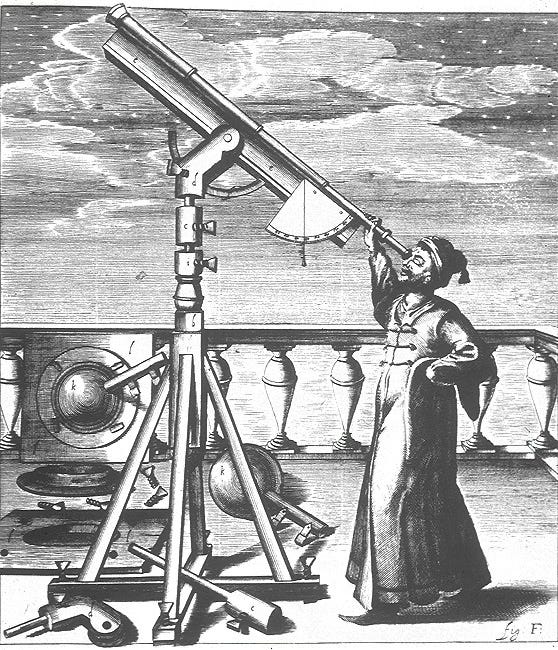
Dear Reader: Please do consider pressing LIKE ❤️ at the end, if you enjoyed this post (So simple! And no salesperson will call)
When I am feeling overwhelmed, sleeplessly watching my mind offer up an endless loop of catastrophic dread, I can sometimes calm myself by imagining deep space. I know this sounds a bit strange but when I visualize the planets hanging in that vast expanse of velvety silence, the icy particles of Saturn’s rings moving at unimaginable speed, I experience the eerie, sudden realization of being absolutely inconsequential - and yet somehow deeply connected and safe. It’s extremely humbling to ponder just how primitive and ridiculous we really are as a species and that is rather an understatement. (Again, fun fact: chimpanzees share a stunning 98.8% of the same DNA as humans. Decent haircuts may be the only thing separating us and even that doesn't apply to everyone!)
My own problems and worries usually melt away under this kind of scrutiny and re-align my settings for a few decent hours of sleep.
When my boys were young, we watched the movie ‘Men in Black’ and the closing scene is something that we have returned to many times over the years. The impact of this ending was so powerful to them - and enduring - and my eldest leaned into me at the time and whispered “Mum, is it okay that my heart is beating really fast right now?”
I found the extract in question on YouTube and have linked below - only a few seconds in length so please do have a quick watch.
(Perhaps a little hokey so many years on but pretend you are seven!)
I understood exactly what my son was feeling. It’s that first moment when you realize with a jolt that we know so little about the universe or even what the purpose of our own planet might be. Or is everything just random, a truly distressing concept. My older brother — who went on to become a physics major — once very seriously enquired at a similar age that if God created the universe, what exactly was he standing on whilst working away?
I do love that story and all the more so, since my brother’s behind-his-back nickname is ‘Spock’ …
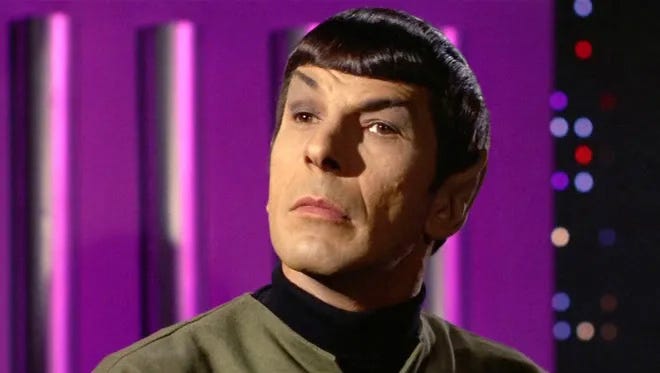
I remember being fascinated by astronomy myself as a young child but strangely, I was and remain, bored with science fiction or most of the popular, spacey TV fare. (Unlike my other brother who … travels to attend Star Trek conferences and frequently signs off with a Vulcan emoji).
[Clears throat.]
I think my own quest then - and now - is a desire to interpret and understand quantum physics in a mystical William Blake/Walt Whitman kind of way, if that makes sense.
There are many popular scientists who break things down for we mortals to understand, especially the wonderful Brian Cox, a delicious favourite of mine, as well as Carl Sagan and Neil DeGrasse Tyson.
But in real life it’s simply too much to process for most of us and we tend to just make a sandwich or lie down instead.
Determined as I am though, I actually bought a telescope when the boys were young and joined the local branch of an astronomical society which met once a month at our branch library. My simple goal was to master finding and identifying the more obvious bits of the night sky, meet some like-minded people and impress my sons at a later date. I wanted to be Jodie Foster in ‘Contact’ and acquired some Blundstone boots, straight-legged jeans and a teeny flashlight with a red light so that books could be consulted without compromising the precious darkness. I was ready, excited and prepped for upcoming adventure.
Readers, can I share that stereotypes do sometimes have a source?
Firstly, I was the only female. This would not have been an issue were it not for the fact that every guy there was socially awkward and kept doing Monty Python voices - badly, repeatedly, manically - for way too long. They would answer “A hair past a freckle!” in response to being asked what time it was and brayed loudly at their own jokes. More than a few members looked at my apparently modest telescope and brightly offered to show me their own “Big Ten Inch” on some future occasion.
I am not making this up.
Another highlight was the announcement of a group competition whose grand “prize” would be some old ‘Victoria Secret’ catalogues. This caused great excitement amongst the group and even some hooting applause.
I felt let down, extremely sad and did not return.
Eventually, I sold that telescope. Now, years later, I continue to educate myself via the many night sky maps that are available online. (Sans the assistance of anyone’s Big Ten Inch.)
My mother took me to our local bookstore when I was about ten years old to see about getting some answers to my many questions. I remember this day vividly as it was something of an event. The shop had one of those sloping, rolling ladders that slid back and forth to file books and there were floating dust motes clearly visible in the slanting sunlight. The smell of books, of leather and paper was evident as soon as the door opened with its three tinkling bells across the top. The older woman who worked there was helpful and showed us a few colourful books on both dinosaurs (another big interest at the time) and the planets and we ended up with one on each subject. But I remember feeling my cheeks burn, when I overheard one of the ladies comment as she slipped the books into a paper bag that “these are funny things for a little girl to be interested in though, aren’t they?”
This still offends me. I mean, it’s not like they were books on true crime or war. But this was, I suspect, typical of that closed, ‘MadMen’ era way of thinking.
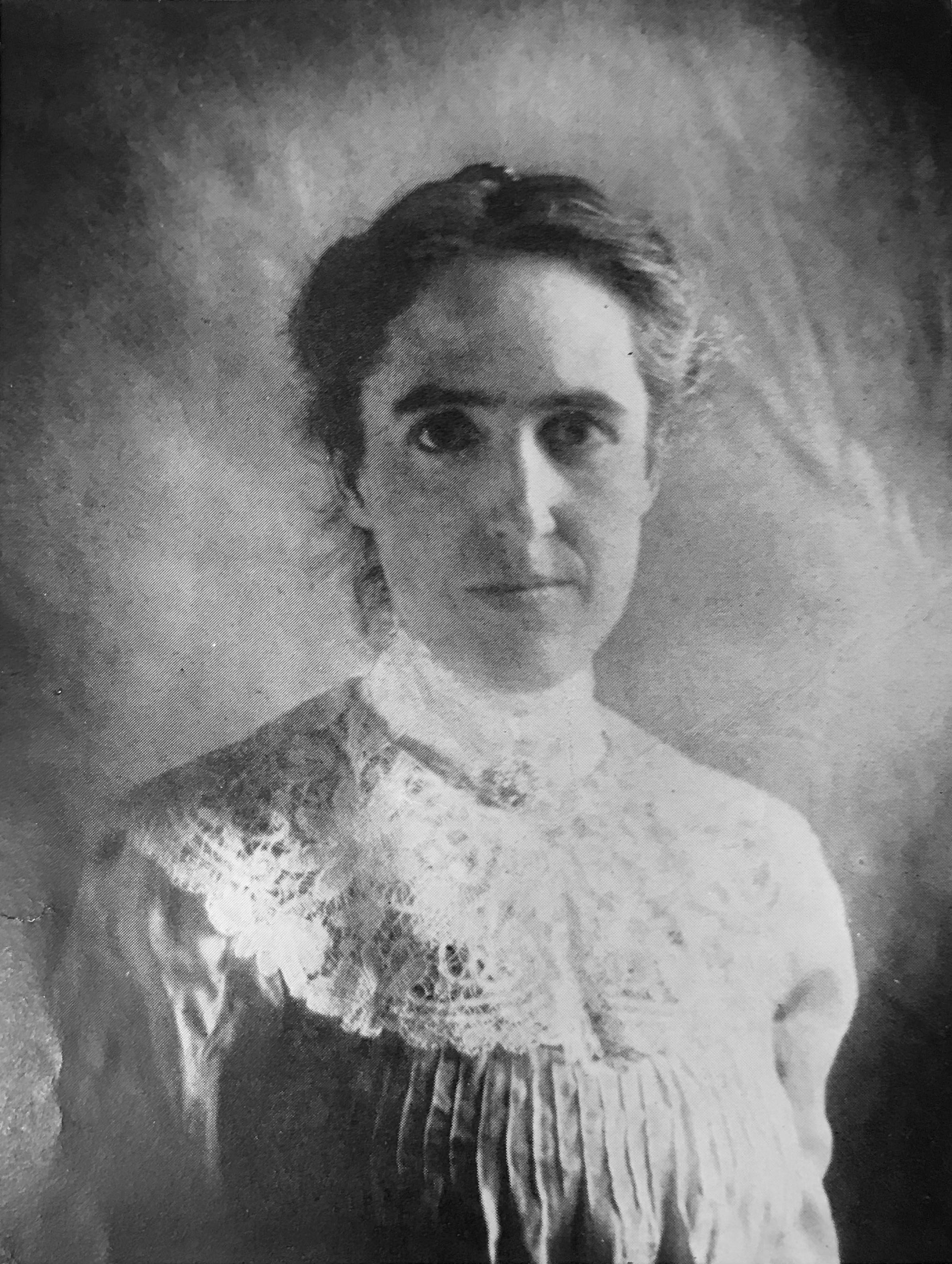
I recently read about ground-breaking and brilliant astronomer/scientist Henrietta Swan Leavitt, who made extremely important discoveries, one of which was the following:
Henrietta Leavitt determined there was a direct relationship between the period of a star's dimming and the star's intrinsic brightness. This meant that if an astronomer could measure the period of any Cepheid star, they could infer its intrinsic brightness. Once a star's intrinsic brightness is known, astronomers can calculate how far away the star is by knowing how light dims the further it travels. This was quickly recognized as a valuable new tool to measure distances to this class of variable star even when located far from Earth.

 (From: https://www.cfa.harvard.edu/news/remembering-astronomer-henrietta-swan-leavitt

Despite this, she was typically not given the recognition that she deserved and was not even allowed to "operate" a telescope. Unbelievable!

She was not permitted to take up the theoretical work that would have enabled her discovery of the unique property of Cepheid stars to be put into practice. That activity was reserved for the men astronomers that followed her.
She died before realizing the full impact of her discovery.

(From: https://www.cfa.harvard.edu/news/remembering-astronomer-henrietta-swan-leavitt

So incredibly sad, isn't it?

I leave you with a stunning poem by - astronomer, as well as truly gifted poet - Rebecca Elson.

ANTIDOTES TO FEAR OF DEATH

Sometimes as an antidote
To fear of death,
I eat the stars.

Those nights, lying on my back,
I suck them from the quenching dark
Til they are all, all inside me,
Pepper hot and sharp.

Sometimes, instead, I stir myself
Into a universe still young,
Still warm as blood:

No outer space, just space,
The light of all the not yet stars
Drifting like a bright mist,
And all of us, and everything
Already there
But unconstrained by form.

And sometime it’s enough
To lie down here on earth
Beside our long ancestral bones:

To walk across the cobble fields
Of our discarded skulls,
Each like a treasure, like a chrysalis,
Thinking: whatever left these husks
Flew off on bright wings.

A warm welcome to new subscribers, so happy to have you here.

Please press LIKE ❤️ if you enjoyed this post (So simple! No salesperson will call) since this helps others to find my work which remains free.

If you have any feelings about this piece, however tiny, please comment. I love to hear them and respond to each one.

Thank you as always for being here with me, your support means everything xo
Funny but also sad, Sue! I enjoyed your hilarious account of the local astronomy club - yet it perfectly matches with the discrimination and silencing that so many female scientists seem to have had to deal with.
In my day job I am lucky to have the chance to talk to a lot of brilliant young scientists, male and female. Things seem to have moved forward, but some way still to go.
"...we tend to just make a sandwich or lie down instead." Yes! Some things are best settled by both strategies: eating a sandwich while lying down can sort just about anything.
I loved that you watched Men in Black with your sons; what a dear thing your son said to you about his heart beating quickly. I said, "Ohhhhhh. . . . " out loud when I read that.
P.S. I had forgotten all about that ending to Men In Black. Thanks for posting the video!